
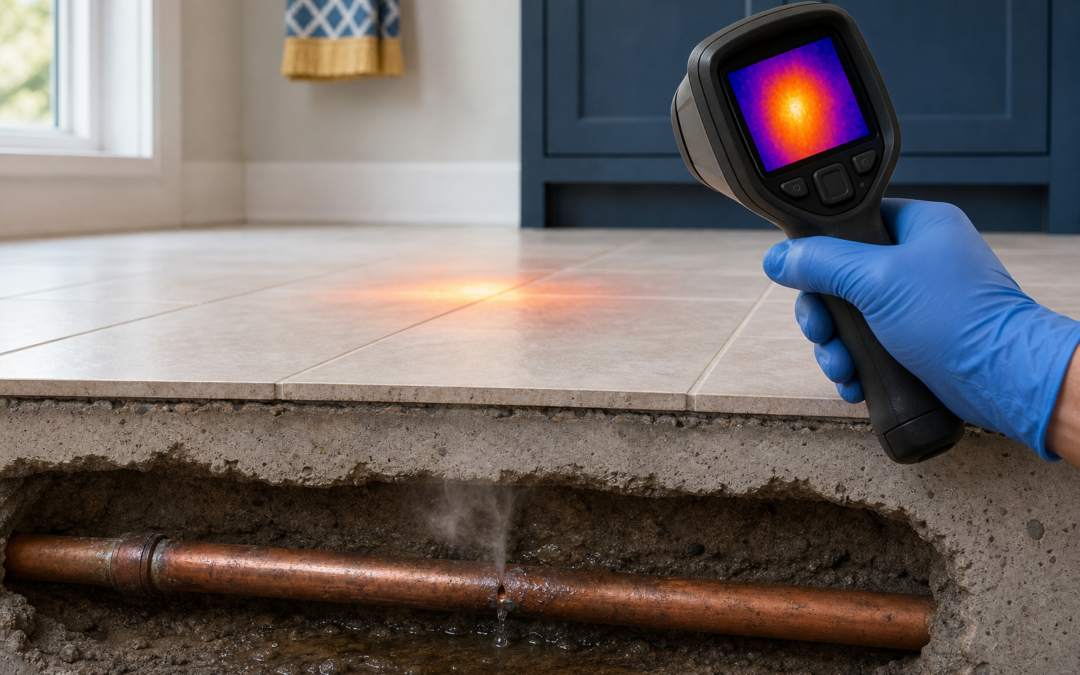
Yes, a localized warm spot can be a sign of a leaking hot-water pipe beneath a concrete slab. Heat from escaping water can travel through the concrete and finished flooring, making one area feel warmer than the surrounding surface. Warmth alone does not prove there is a leak, however. Direct sunlight, heating ducts, radiant-floor systems, appliances, and normal hot-water pipe routes can create a similar sensation.
The pattern matters. A spot that remains warm when the sun has moved, returns at unexpected times, becomes larger, or appears with unexplained water use or moisture deserves closer attention. Professional leak detection can compare the temperature pattern with the plumbing layout and other evidence before anyone recommends opening the floor.
How a Hot-Water Leak Can Warm the Floor
Many homes built on concrete slabs have water lines routed beneath or through the foundation. When a hot-water supply line develops a small opening, heated water can escape into the material around the pipe. The surrounding soil and concrete absorb that heat. The warmer area may eventually be noticeable at the tile, wood, laminate, or carpet above.
The warmest surface point is not always directly over the damaged section. Water and heat can move along a pipe trench, crack, joint, or low area before reaching the finished floor. Different flooring materials also transfer heat differently. Tile may make a temperature change easier to notice than thick carpet, while wood or laminate can spread the sensation across a broader area.
A cold-water leak usually does not create the same warm-floor clue, but it can produce other signs such as dampness, staining, musty odors, or unexplained water use. That is why temperature is only one part of a hidden-leak evaluation.
Other Conditions Can Make One Area Feel Warm
Before assuming a pipe has failed, consider whether an ordinary heat source matches the location and timing. Common possibilities include:
- Sunlight warming the floor through a nearby window or glass door.
- A heating duct, furnace chase, or mechanical line beneath or beside the area.
- A refrigerator, dishwasher, water heater, or other appliance releasing heat nearby.
- A fireplace, oven, or dryer operating on the other side of a wall.
- A radiant-floor heating system following its normal zone pattern.
- A hot-water line warming the floor during expected use without leaking.
These sources often follow a predictable schedule. Sun-warmed flooring cools after the light moves. Appliance heat appears while or shortly after the equipment runs. Radiant heat usually follows a defined zone rather than a new irregular patch.
A plumbing-related warm spot may be less predictable. It may persist when nearby equipment is off, return when no one has intentionally used hot water, or change in size. None of those observations confirms a slab leak, but they help a plumber decide what to test.
Warning Signs That Make a Hidden Leak More Concerning
Warm flooring deserves faster attention when it appears with another change in the home. Watch for conditions such as:
- A water bill or water-use pattern that rises without a known reason.
- The sound of water moving when fixtures and water-using appliances are off.
- Damp grout, darkened flooring, lifting material, or a musty smell near the warm area.
- Reduced hot-water availability or a water heater that seems to run more often than usual.
- Lower water pressure that cannot be explained by another active fixture.
- A warm area that is expanding or becoming noticeably hotter.
- Cracking, swelling, or staining in nearby flooring or baseboards.
Some of these signs can have other causes. A failed appliance connection, drain leak, roof leak, condensation problem, or flooring issue may also create moisture. The useful question is whether several observations point toward the same concealed supply-line area.
Visible water, wet electrical components, or rapidly spreading damage changes the situation. Keep people away from the affected area. If the home’s interior water shutoff is safely accessible and you already know how to use it, stopping the water may limit damage. Do not touch electrical equipment in a wet area, cut the floor, or attempt to operate an unfamiliar utility-side valve.
Safe Observations to Record Before the Appointment
Simple notes can make the inspection more efficient without disturbing the floor. Record when the warmth is easiest to feel, whether it changes after showers or other hot-water use, and whether sunlight or nearby equipment could explain the timing. Mark the boundary with removable painter’s tape only if doing so will not damage the finish.
Also note:
- Which room and floor surface are affected.
- Whether the warm area is new, stable, or growing.
- Any nearby staining, odor, dampness, or flooring change.
- Whether hot-water performance or pressure has changed.
- Recent plumbing, appliance, flooring, or HVAC work.
- Any earlier supply-line leak or repiping history you know about.
Photographs taken at different times can help document a visible change. Avoid pouring water on the floor, running hot water only to make the spot warmer, drilling a test hole, removing flooring, or using a handheld tool to probe the slab. Those steps can increase damage or complicate the diagnosis.
If you can read the home’s water meter safely without opening, adjusting, or touching its valve, the reading may add context after fixtures and water-using appliances are confirmed off. Meter movement can have several explanations, including irrigation or an appliance connection, so it should not be treated as proof of a slab leak.
What Professional Leak Detection May Check
A plumber starts by comparing the symptom with the water-line route, fixture locations, nearby equipment, and the home’s recent water use. Leak detection may use several observations together rather than relying on one device.
Depending on the property and conditions, the evaluation may include:
- Comparing temperatures across the floor with thermal imaging.
- Listening for pressurized water escaping beneath the slab.
- Checking moisture at the flooring, baseboards, or nearby walls.
- Isolating parts of the plumbing system when safe access allows it.
- Reviewing pressure behavior and water-meter movement.
- Tracing the likely route of hot- and cold-water supply lines.
Thermal imaging can identify a temperature difference, but it does not see through concrete or prove by itself that a pipe is leaking. Sunlight, ducts, appliances, and normal pipe heat can also appear as warm patterns. Acoustic equipment can help locate escaping water, but building noise, pipe depth, and floor material affect what can be heard. Pressure and meter observations can support the diagnosis, but they still need to be interpreted in context.
The goal is to narrow the likely source before choosing an opening or repair path. A condition-based evaluation reduces the chance of treating the warmest visible spot as the exact failure point without enough evidence.
Repair Options Depend on the Pipe and Location
If testing supports a leaking under-slab supply line, the next step depends on the pipe material, accessibility, leak location, and condition of the wider system. One isolated accessible failure may support a focused repair. A line with repeated failures or widespread deterioration may call for a different route or broader pipe repair and installation discussion.
No single warm-floor symptom determines whether the floor must be opened, a line can be rerouted, or more extensive pipe work is appropriate. Ask what evidence identifies the affected line, how the proposed access point was chosen, and what parts of the plumbing system the repair will address. The recommendation should match the observed condition rather than the temperature clue alone.
When Pasadena Homeowners Should Schedule an Evaluation
Arrange an evaluation when the warm area has no clear non-plumbing explanation, persists after ordinary heat sources are removed, or appears with water-use, moisture, sound, pressure, or flooring changes. Even a small pressurized leak can continue releasing water while the symptom seems minor.
E.T. Plumbing provides plumbing and leak-detection service in Pasadena. Share the location, timing, accompanying symptoms, and any safe observations you recorded so the inspection can begin with the conditions you actually noticed.
Get Clear Answers About a Warm Floor Spot
If a new warm area is raising questions about a hidden hot-water line, contact E.T. Plumbing. A plumber can compare the heat pattern with the plumbing system, look for corroborating evidence, and explain the repair options that fit the findings.